Portugal
 Spain
Spain Italy
Italy Greece
 Grenada Citizenship by Investment
Spain's Non-Lucrative Visa is a residence route for retirees, financially independent applicants, passive-income households, and savings-backed families who want to live in Spain without working.
It is not a work visa and it is not a workaround for people who plan to keep working online. If your income depends on employment, freelancing, client invoices, or business operations, route-choice is the first legal-risk question to settle.
This guide reflects the official 2025/2026 consular wording, the new immigration regulation under RD 1155/2024, and current examples from the United States, United Kingdom, Canada, and Australia. Where consulates differ, the page says so rather than forcing one universal rule.
Last updated: June 18, 2026. Official sources checked: Washington consulate, London consulate, Toronto consulate, Canberra embassy, and BOE RD 1155/2024. Requirements can change by consulate and case facts, so confirm the exact checklist for the consulate that serves your legal residence.
Spain NLV at a glance
What to know before applying
UK applicant? If you are comparing the Non-Lucrative Visa with work, student, family or digital-nomad routes, start with our UK-to-Spain moving checklist.
Open to non-EU/EEA citizens who can live from savings, pensions, investments, rental income, or other passive resources.
Spouses, registered partners, and dependent children can usually apply with adjusted income thresholds.
The route does not require a job offer and does not allow work in Spain. Use the Digital Nomad Visa if you will work online.
Renting is acceptable. Buying real estate is not required to qualify for the NLV.
Renewals depend on continued funds, compliant health coverage, residence evidence, and the no-work condition.
After five years, long-term residence may become available. Citizenship timing is separate and depends on nationality and case facts.
Is Spain's Non-Lucrative Visa Right for You?
The Spain Non-Lucrative Visa can be a strong route if you are financially independent, can prove the funds cleanly, and will not work while resident in Spain. It is a poor fit if you need to keep employment, freelance work, client invoicing, or day-to-day business operations active after the move.
Movingto helps with route diagnosis, document sequencing, consulate-readiness checks, and coordination with vetted Spanish legal partners where regulated advice is needed. Movingto is an independent adviser and coordinator, not the Spanish government and not a law firm.

Check Your Spain Visa Route Before Filing
Book a call if your case is savings-only, includes family members, has a prior refusal, depends on a strict consulate, or sits between the Non-Lucrative Visa and Digital Nomad Visa.
Book a Spain Visa Route CallWhat Is Spain's Non-Lucrative Visa (NLV)?
The Spain Non-Lucrative Visa is a national residence visa for non-EU/EEA applicants who want to reside in Spain without carrying out gainful or professional activity. Official consulate pages describe it as residence without work; it is not a permit for employment, self-employment, freelancing, Spanish-client work, or remote/online professional activity. Source: Spanish Consulate in Washington and Spanish Consulate in London.
The route is most often used by retirees, early retirees, passive-income applicants, and families with enough liquid savings to support themselves without working in Spain. It does not require a property purchase or a Spanish investment.
Who Can Apply for Spain's Non-Lucrative Visa?

Eligibility is simple in concept but strict in evidence: you need the right nationality/residence position, enough money, no work intent, compliant insurance, and properly legalized documents.
| Requirement | What it means in practice | Official source |
|---|---|---|
| Non-EU/EEA applicant | Apply through the Spanish consulate that serves your country or region of legal residence. | Washington, London, Toronto |
| No work or professional activity | No employment, self-employment, Spanish-client work, business operation, or remote/online work while residing on the NLV. | Washington no-work wording |
| Financial means | 400% of IPREM for the main applicant plus 100% per dependent; 2026 examples are EUR 28,800 plus EUR 7,200 per dependent. | Washington, London |
| Health insurance | Private or public insurance accepted by the consulate, generally from an insurer authorized to operate in Spain, with coverage comparable to Spain's public system and no copay/coverage-limit issues. | Toronto insurance wording |
| Criminal record certificate | Adults usually need records for the country or countries of residence during the past 5 years, apostilled/legalized and translated as required. | Canberra, Toronto |
| Medical certificate | Recent certificate using International Health Regulations wording; many consulates use a 90-day or 3-month freshness rule. | Canberra medical certificate |
| Accommodation and local-residence evidence | Expect proof of where you will live in Spain, plus proof you are applying in the correct consular district. | Toronto district/residence evidence |
Working-age applicants: some consulates scrutinize no-work intent more closely. Washington, for example, refers to an affidavit committing not to do lucrative work onsite or remotely. If you are employed, self-employed, recently resigned, or savings-only, prepare the no-work explanation before the appointment.
How Much Money Do You Need for the NLV?

The official formula is tied to Spain's IPREM index: 400% of IPREM for the main applicant and 100% of IPREM for each dependent. The consulate examples checked for 2026 use EUR 600/month IPREM, which makes the NLV threshold EUR 2,400/month or EUR 28,800/year for the main applicant and EUR 600/month or EUR 7,200/year for each dependent. Source: Washington consulate and London consulate.
| Applicant group | IPREM formula | 2026 annual minimum | 2026 monthly equivalent | Practical note |
|---|---|---|---|---|
| Main applicant | 400% of IPREM | EUR 28,800 | EUR 2,400 | Passive income is easier to explain than a bare bank balance, but savings can be accepted if liquid and well documented. |
| Applicant + spouse/partner | 400% + 100% | EUR 36,000 | EUR 3,000 | Use marriage/partnership evidence and prove access to joint or sponsor funds. |
| Applicant + 2 dependents | 400% + 200% | EUR 43,200 | EUR 3,600 | Children require birth certificates and sometimes custody/consent documents. |
| Each additional dependent | +100% of IPREM | +EUR 7,200 | +EUR 600 | Budget above the floor where the family is savings-only or applying at a stricter consulate. |
Savings-only applications: official pages allow bank statements and certificates, but consulates can ask for details such as account ownership, balances, dates, average balances, and proof that funds are available. London and Toronto are especially specific about bank-account evidence. If you do not have a pension or regular passive income, plan a stronger bank-history file and a clearer explanation of how you will live without working.
Accepted Proof of Funds
| Evidence type | Useful when | Watch-outs | Official-source cue |
|---|---|---|---|
| Bank statements/certificates | You rely on savings or liquid assets | Some consulates want recent statements, stamped originals, account IDs, average balances, or year-end balances. | London, Toronto |
| Pension/social-security statements | You have recurring retirement income | Show regularity, ownership, and net amount available to you. | Washington |
| Investment/dividend/rental income | You have passive income outside Spain | Avoid anything that looks like ongoing active work or business management from Spain. | London shareholding note |
| Family funds | Spouse/partner/dependent file uses shared money | Prove relationship, access, and consent; minor children may need custody/parental-consent documents. | Canberra family documents |
| Employment or freelance income | Not suitable for NLV | Active work income can create route-choice and refusal risk. Use the Digital Nomad Visa if you will work remotely. | Washington no remote/online work warning |
What Documents Do You Need for the NLV?
Before booking your appointment, make sure you’ve gathered all the required paperwork. Missing or incomplete documentation is one of the most common reasons for visa delays or rejections.
Each document must be translated into Spanish and apostilled or legalized where applicable.
The exact checklist is consulate-specific. Use this table to plan the file by applicant type, then verify the current checklist for your consulate.
| Applicant type | Core documents | Extra evidence to prepare | Common risk |
|---|---|---|---|
| Main applicant | National visa form, passport, photo, financial proof, health insurance, medical certificate, criminal record certificate, accommodation proof, fee forms/receipts. | Consular-district proof, no-work affidavit/statement if requested, bank certificate details if savings-only. | Funds are present but poorly documented, or work intent is unclear. |
| Spouse or registered partner | Passport, form, insurance, medical/criminal records where required, relationship certificate. | Marriage/partnership certificate legalized/apostilled and translated; evidence of shared or accessible funds. | Relationship document is stale, not legalized, or not translated to the consulate's standard. |
| Minor child | Passport, form, insurance, medical certificate where required, birth certificate. | Parental-consent/custody documents if only one parent applies or travels; school planning where relevant. | Missing consent/custody evidence or untranslated birth certificate. |
| Adult dependent | Passport, form, insurance, criminal/medical documents, dependency proof. | Evidence of financial dependency, relationship, and why the person belongs in the family application. | Dependency is asserted but not proved. |
Below is the practical checklist to reconcile against your consulate's instructions.
Where Do You Apply for the Non-Lucrative Visa?
Apply from the country or region where you legally reside. The Spanish consulate that covers that residence controls the exact checklist, appointment route, document standards, fees, and decision workflow. Do not assume another country's checklist applies to your case.
| Consulate example | Appointment route | Decision period stated | Visa validity wording | Operational detail competitors often miss |
|---|---|---|---|---|
| United States - Washington DC | BLS Spain Visa Application Center in Washington DC | Up to 3 months; no expedited process | Visa valid for 1 year; TIE within 1 month after entry | Affidavit includes a commitment not to work onsite, remotely, or online. 2026 financial example: USD 32,000 + USD 8,000 per dependent. |
| United Kingdom - London | BLS Spain Visa Application Centre, London | 2 months from the day after submission, extendable | Visa valid for 1 year; TIE within 1 month after entry | Financial accounts abroad require detailed bank information, including account identification and balance history. S1 can be accepted for healthcare where applicable. |
| Canada - Toronto | Email appointment route through the consulate | 3 months from the day after submission, extendable | Visa valid for 90 days; TIE within 1 month after entry | Canadian criminal record must be an RCMP fingerprint certificate, apostilled by Global Affairs Canada and translated. |
| Australia - Canberra | In-person appointment at the Consular Office for ACT/Queanbeyan jurisdiction | 3 months, extendable | Visa valid for 90 days; TIE within 1 month after entry | Canberra covers only ACT and Queanbeyan; other Australian residents usually use Sydney or Melbourne. Bank statements are expected to be signed/stamped by the branch. |
Sources: Washington, London, Toronto, Canberra.
How Do You Apply for Spain's Non-Lucrative Visa?
Applying for the Spain Non-Lucrative Visa may seem daunting, but with the right preparation and documentation, the process is surprisingly straightforward.
Below is a complete breakdown of the 8 essential steps you need to follow, presented in a visual checklist format.
The application starts outside Spain at the Spanish consulate or visa centre serving your legal residence and ends in Spain after you apply for the TIE residence card. Official pages differ on appointment route, decision period, and visa validity wording, so use your consulate's checklist as the filing authority.
| Step | What to do | Official-source note |
|---|---|---|
| 1. Book the correct appointment | Apply through the consulate or BLS/visa centre that covers your legal residence. | Washington uses BLS in Washington DC; London uses BLS in London; Toronto uses an email appointment route; Canberra uses consular appointments. |
| 2. Prepare originals, copies, apostilles and translations | Build the file before the appointment and check document freshness. | Criminal and medical certificates often have strict age limits; translations and apostilles/legalisations depend on issuing country. |
| 3. Attend the appointment and pay fees | Submit the application in person unless a consulate explicitly says otherwise. | Fee amounts and payment method differ by nationality and office. Use the current consulate page. |
| 4. Wait for a decision | Respond quickly if the consulate requests missing documents or clarification. | Washington, Toronto and Canberra describe up to 3 months; London describes 2 months. These periods can extend. |
| 5. Collect the visa and enter Spain | Enter Spain within the validity period printed on your visa. | Do not assume a universal 90-day entry rule. The checked consulates use different validity wording. |
| 6. Apply for the TIE | After entry, apply for the TIE residence card at the Foreigner's Office/National Police process. | The checked consulates say to apply within 1 month after entry. Use the Spanish immigration status portal and local cita workflow. |
| 7. Plan renewal early | Keep financial records, insurance, address evidence, travel-day records, and tax advice organized during year one. | Renewal problems are usually evidence problems, not only form problems. |
If refused, official consulate pages describe two review routes: an optional reconsideration appeal within 1 month, or judicial review within 2 months. The practical first step is to identify whether the problem was legal fit, missing evidence, or consular discretion before deciding whether to appeal, refile, or use a different visa route.
Visa Validity, TIE and Renewal Timing
Do not collapse these into one deadline. The visa sticker, the entry period, the TIE card deadline, the first residence-card validity, and the renewal window are separate steps.
| Stage | What to check | Official-source position |
|---|---|---|
| Visa validity wording | The period printed on the visa sticker and described by your consulate | Washington and London describe 1 year; Toronto and Canberra describe 90 days. Check your issuing consulate and the sticker. |
| Entry deadline | When you must enter Spain | Enter Spain during the visa validity period. Do not assume every consulate uses the same wording. |
| TIE deadline | When to apply for the Tarjeta de Identidad de Extranjero | Apply within 1 month after entering Spain. This appears consistently across the checked consulate pages. |
| Initial residence card | The first residence authorization/card period | Plan around the first-year residence period, followed by renewals if requirements continue to be met. |
| Renewal window | When to renew in Spain | Prepare before expiry; renewals are handled in Spain through the competent immigration office and fee workflow. |
This visa can count toward long-term residence if you keep lawful residence and meet the physical-presence and renewal requirements. Citizenship is a separate nationality application with its own residence, integration, and nationality rules.
After approval, separate the visa sticker from the residence card. The consulate-issued visa lets you enter Spain within its validity period. The TIE is the residence card you apply for after arrival. The checked official pages consistently say to apply for the TIE within 1 month after entering Spain.
| Timing item | Planning rule | Evidence to keep |
|---|---|---|
| Arrival and TIE | Enter during the visa validity period and apply for TIE within 1 month after entry. | Passport, visa, entry stamp, empadronamiento, EX-17, fee payment, photos. |
| Year-one compliance | Maintain the same conditions that justified approval: sufficient funds, compliant insurance, no work activity, and Spain as your residence base. | Bank statements, insurance renewals, housing evidence, travel-day records, tax advice notes. |
| Renewal preparation | Start before expiry; do not wait until the card is close to lapse. | Current TIE, passport, address proof, updated funds, insurance, fees through Form 790-052. |
| Long-term planning | After 5 years of qualifying legal residence, long-term residence may become available if the requirements are met. | Continuous residence evidence, absence/travel records, renewals, tax and municipal records. |
| Status modification | If you later want to work, assess a formal modification or a different route instead of working on the NLV. | Job offer/business plan, eligibility evidence, and advice from the relevant professional. |
Tax residence is a separate tax question. Spending more than 183 days in Spain in a calendar year is a common tax-residence trigger, but treaty position, centre of interests, assets, and filing obligations need case-specific tax advice.
Renewal filing and long-term planning
Your first residence authorization/card period is generally planned around year one; the visa sticker itself has consulate-specific validity wording. Renewal is usually straightforward only if you continue meeting the income, insurance, residence and no-work conditions.
Spain's renewal process rewards consistency: keep funds, insurance, address evidence, travel records, and tax advice organized before the card expires.
Renewal Process
The initial residence authorization is one year, followed by two-year renewal periods if you continue to meet the financial, insurance, residence and no-work conditions. The visa sticker itself has consulate-specific validity wording. Under RD 1155/2024, renewal is requested during the two months before card expiry; a late filing within three months after expiry may be possible but can carry sanction risk.
To renew, prepare your passport, current TIE card, proof of residence (such as utility bills or empadronamiento), updated bank statements, and renewed compliant health coverage.
You will also need the relevant renewal fee, such as Form 790-052. File through the competent Oficina de Extranjería or electronic channel; attend in person later for fingerprinting and TIE collection if required.
After your first renewal, the next extension covers another two years, bringing your total residence time to five years. By then, you may qualify for long-term residency, which grants indefinite residence rights similar to Spanish citizens, allowing you to live and work freely in Spain.
If your circumstances change, you can also modify your status to a work or self-employment permit after your first year.
To do this, submit a modificación de residencia no lucrativa a residencia y trabajo request along with your job offer or business plan and proof of continued financial stability.
Processing typically takes 2–4 months, and once approved, you’ll be allowed to work legally in Spain without leaving the country.
Common Rejection and Delay Risks
Most weak NLV files fail because the evidence does not match the legal theory of the visa. The file must show that you can live in Spain without work and that every required document is current, legalized, translated, and consulate-ready.
| Risk | Why it matters | How to reduce it |
|---|---|---|
| Insufficient or unclear funds | The money exists but ownership, liquidity, balance history, or passive-income source is not clear. | Use official bank certificates/statements and explain savings-only cases carefully. |
| Work-intent concerns | The consulate suspects you will work from Spain on a no-work visa. | Use the Digital Nomad Visa if you will work; otherwise prepare resignation/no-work evidence if requested. |
| Wrong insurance | Travel insurance, copays, deductibles, waiting periods, or coverage limits can fail the health-insurance requirement. | Use a policy accepted by the consulate and aligned with Spanish public-system coverage expectations. |
| Missing apostille/legalisation or translation | Otherwise valid documents may be rejected procedurally. | Check issuing-country rules and use sworn Spanish translations where required. |
| Weak accommodation proof | The consulate is not satisfied you have a real place to live. | Prepare lease, deed, host evidence, hotel/reservation evidence, or future housing plan according to the consulate checklist. |
| Expired documents | Medical and criminal certificates can age out before submission. | Sequence appointments, apostilles, translations, and submission date around document freshness. |
| Family-document gaps | Spouse, partner, minor-child, custody, or dependency evidence is incomplete. | Collect relationship, birth, custody/consent, and dependency evidence early. |
What's the Difference Between NLV and Digital Nomad Visa?
The route-choice question is simple: if you will work while living in Spain, the NLV is usually the wrong visa. If you will live from passive income or savings and will not work, the NLV may fit.
| Issue | Non-Lucrative Visa | Digital Nomad Visa |
|---|---|---|
| Work permission | No gainful or professional activity. Official consulate wording can include remote or online work in the prohibition. | Designed for qualifying remote work for non-Spanish employers/clients, subject to the Digital Nomad Visa rules. |
| Income type | Passive income, pensions, investment/rental income, or savings that support you without work. | Active employment or freelance income from abroad, plus route-specific documents. |
| Financial threshold | 2026 consular example: EUR 28,800/year main applicant + EUR 7,200/year per dependent. | Different statutory formula and evidence set. Do not reuse an NLV checklist for a DNV case. |
| Best fit | Retirees, financially independent applicants, savings-backed families, and passive-income households. | People who will keep working online for foreign employers or clients while living in Spain. |
| Risk signal | You are working age, savings-only, recently employed, or still operating a business. | Your employer/client structure, social-security/tax documents, or Spain-client exposure is unclear. |
| CTA trigger | Book a call if you are savings-only, applying with family, previously refused, or unsure which consulate standard applies. | Book a route-choice call if you will work remotely or invoice clients after moving. |
What Taxes Do NLV Holders Pay in Spain?

Spending more than 183 days in Spain in a calendar year is a major tax-residence trigger. If you become Spanish tax resident, you generally declare worldwide income, including pensions, investments, or rental income from abroad, under Spain’s IRPF system, with rates depending on income type and region. Treaty position, centre of interests, assets, and filing obligations need case-specific tax advice.
If you’re from the United States, the U.S.–Spain Tax Treaty helps prevent double taxation through credits like the Foreign Tax Credit (Form 1116). However, you must still file your U.S. tax return and report foreign assets under FBAR (FinCEN 114) or FATCA (Form 8938) if applicable. Spain also requires residents to declare foreign assets above €50,000 using Modelo 720.
To manage finances smoothly, it’s best to open a Spanish bank account once you have your NIE or TIE card. Leading expat-friendly banks such as BBVA, Sabadell, CaixaBank, and Santander offer English-language support and online banking. Use one account for daily expenses and another for international transfers to simplify tracking.
For long-term financial health:
- Maintain at least the required income threshold for renewals (€57,600 for the two-year renewal).
- Keep your health insurance active without coverage gaps.
- Track your residency days carefully to stay compliant with tax rules.
- Consult a qualified Spanish tax advisor (asesor fiscal) to help structure your finances efficiently and avoid unnecessary penalties.
What's It Like Living in Spain on the NLV?

Once your Non-Lucrative Visa is approved and you’ve settled into your new home, you officially become a Spanish resident.
This brings many advantages, including access to healthcare, education, and the opportunity to truly immerse yourself in Spain’s relaxed lifestyle. Here’s what you can expect once you begin your new chapter.
Healthcare Access
Spain’s healthcare system ranks among the best in Europe, but NLV applicants should not assume public coverage follows automatically from arrival, renewal, NIE, or municipal registration.
For the visa and renewal file, maintain compliant health coverage accepted by the consulate or immigration office. Later public healthcare access depends on a separate entitlement or contribution route, such as S1 eligibility, employment/social-security coverage, Convenio Especial, or another lawful basis.
If you hold private insurance:
- Ensure your policy covers full hospitalization and outpatient services.
- Most popular insurers include Sanitas, Adeslas, and Mapfre, with English-language support available.
If you register for public healthcare later:
- You’ll receive a tarjeta sanitaria individual (TSI), which allows access to free or low-cost treatment in public hospitals.
Housing and Accommodation

You can either rent or buy property while living on the NLV.
Renting is often the easier choice for newcomers, as many consulates require proof of a lease to issue the visa.
Typical monthly rents in 2026:
- Madrid: €1,000–€1,800
- Valencia: €800–€1,400
- Seville: €700–€1,100
- Málaga or Alicante: €900–€1,500
If you decide to purchase a home, you can do so under your own name as a resident. However, buying property does not speed up citizenship or visa renewals under the NLV program.
Education for Families
Spain is very family-friendly, and NLV holders can enroll their children in public, private, or international schools.
- Public schools are free and follow the Spanish curriculum, making them great for long-term integration.
- International schools offer British, American, or IB programs, ideal for expat families planning shorter stays.
- Tuition at international schools generally ranges from €6,000 to €12,000 per year.
Your child must be registered at a local town hall (empadronamiento) before enrollment.
Banking and Everyday Finances
Once you receive your TIE card, opening a Spanish bank account is straightforward. Recommended banks for expats include BBVA, Santander, CaixaBank, and Sabadell, most of which offer English-speaking online banking.
- Use your NIE number (from your visa) when opening the account.
- Some banks also allow pre-residency accounts for those applying for the visa abroad.
Most everyday expensesrent, utilities, internet, and insurance — are handled via direct debit (domiciliación bancaria).
Language and Integration

Although English is widely understood in major cities, learning basic Spanish will significantly improve your experience.
Consider enrolling in local courses or using free integration programs offered by your Ayuntamiento.
Daily life becomes easier when you can navigate local bureaucracy, understand bills, and connect with neighbors.
Transportation and Mobility
Spain’s transport infrastructure is efficient and affordable.
- Metro & buses: Available in all major cities with prepaid passes.
- Trains: The Renfe AVE high-speed trains connect most large cities in under 3 hours.
- Driving: You can use your foreign license for up to six months, but many residents exchange it for a Spanish one later.
Lifestyle and Cost of Living
Spain offers a comfortable lifestyle at a fraction of the cost of other Western European countries. Groceries, dining, and entertainment remain affordable even in big cities.
Estimated monthly living costs (excluding rent):
- Single: €800–€1,200
- Couple: €1,400–€1,800
- Family of four: €2,000–€2,500
The NLV’s flexibility means you can live anywhere in Spain, from the cultural heartbeat of Madrid to the Mediterranean calm of Valencia or the island life of Mallorca.
What Are the Benefits of Spain's Non-Lucrative Visa?
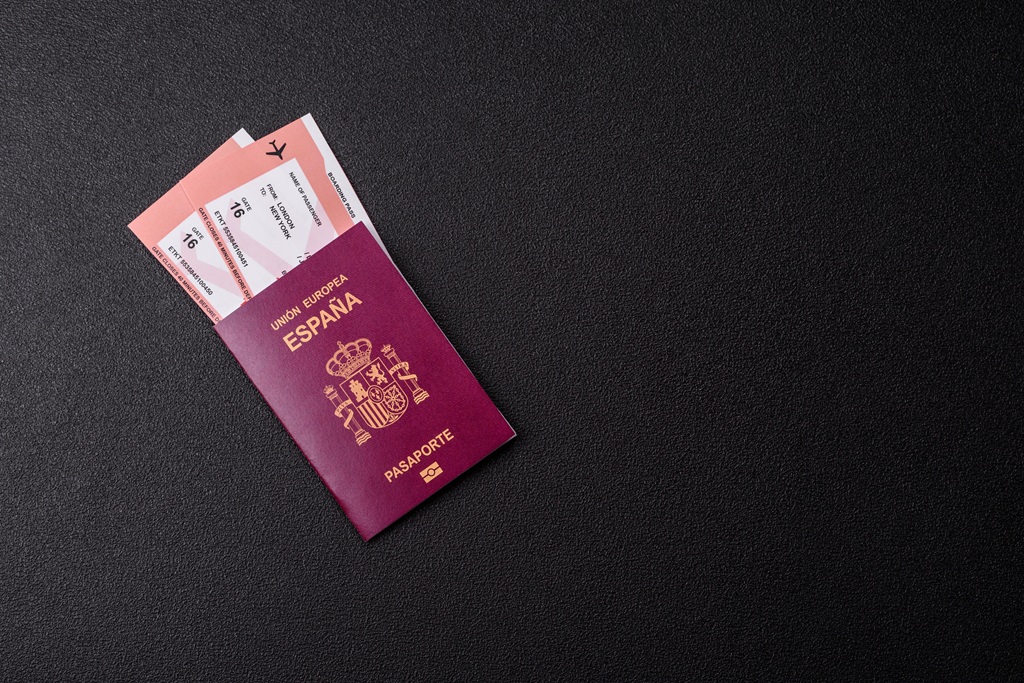
The Spain Non-Lucrative Visa offers more than just legal residency.
It can provide a stable residence path for people who can support themselves without work. The benefits are strongest when the legal fit is clean and the evidence is prepared before the consular appointment.
1. Live in Spain Without Needing a Job Contract
You don’t need a Spanish employer or investment to qualify.
If you have sufficient savings, pension income, investment income, rental income, or other passive resources, you may be eligible. Active work is not permitted on this visa; use the Spain Digital Nomad Visa if you will work online or invoice clients after moving.
2. Family Members Can Join You
The NLV supports family reunification from day one.
Your spouse or registered partner and dependent children can apply as dependents under the same visa, provided your income meets the expanded thresholds.
3. Clear Path to Long-Term Residency and Citizenship
After five years of legal residence, you can apply for long-term residency.
For most nationalities, Spanish citizenship becomes available after 10 years. Citizens of Latin American countries, Andorra, Philippines, Equatorial Guinea, and Portugal are eligible after just two years.
4. Access to Public and Private Healthcare
For the NLV, maintain compliant health coverage. Public healthcare access depends on a separate entitlement, such as S1 or another qualifying route, not merely a NIE or municipal registration.
Private health insurance is central to the initial application and renewals. Do not rely on future public healthcare access unless your case-specific route supports it.
5. Visa-Free Travel Within the Schengen Zone
With a Spanish residency card, you can travel freely throughout the Schengen Area for up to 90 days in any 180-day period.
This is a major bonus for anyone planning to explore Europe while based in Spain.
6. Affordable Living Compared to Other EU Countries
Spain offers exceptional value. Whether you’re renting in Granada or shopping in Galicia, your money typically goes further here than in France, Italy, or Germany.
The relatively low cost of living makes the NLV viable for a wide range of budgets.
7. Property Purchase Optional
You are not required to buy property to apply. Renting is completely acceptable, which helps lower the entry barrier.
That said, many NLV holders do eventually invest in property once settled.
8. Flexible Transition to Other Residency Types
If your plans change later, assess a formal modification or a different residence route before working. The no-work condition still applies while you hold NLV status.
Frequently Asked Questions About Spain's NLV
Still Unsure Which Spain Visa Route Fits?
Book a call if you are savings-only, applying with family, comparing the NLV with the Digital Nomad Visa, or worried about a strict consulate checklist.
Book a Spain Visa Route CallSources
- Spanish Consulate in Washington - Non-Lucrative Residence Visa
- Spanish Consulate in London - Non-Lucrative Residence Visa
- Spanish Consulate in Toronto - Non-Lucrative Residence Visa
- Embassy of Spain in Canberra - Non-Lucrative Residence Visa
- BOE - Real Decreto 1155/2024 immigration regulation
- Spanish Government Immigration Status Portal
Last updated: June 18, 2026. This page links to official sources next to the highest-risk claims; consulate checklists still control individual applications.